Structural Steel Contractors Overview: Roles, Standards, and Modern Construction Practices
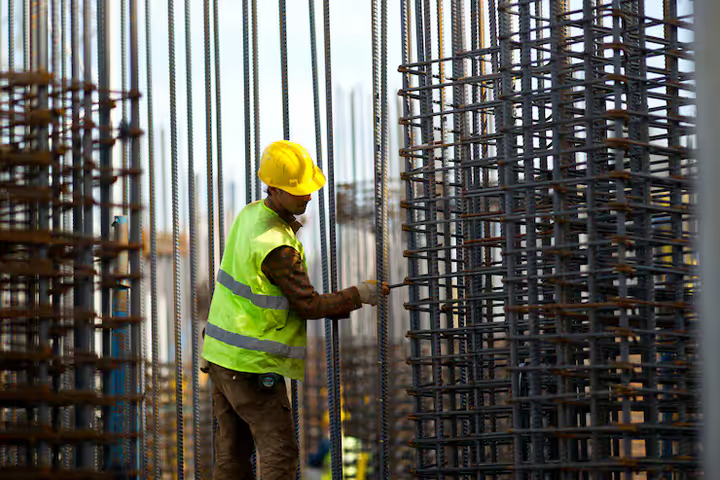
Structural steel contractors play a critical role in modern infrastructure and building development. These professionals specialize in assembling, installing, and managing steel frameworks used in large structures such as commercial buildings, bridges, factories, and high-rise developments.
Structural steel is widely used because of its strength, durability, and flexibility in design. Contractors involved in this field coordinate closely with architects, structural engineers, and construction managers to ensure that steel components are installed accurately according to engineering specifications.
In most construction projects, structural steel contractors are responsible for several important tasks including:
-
Steel frame installation
-
Structural alignment and precision assembly
-
Coordination with fabrication teams
-
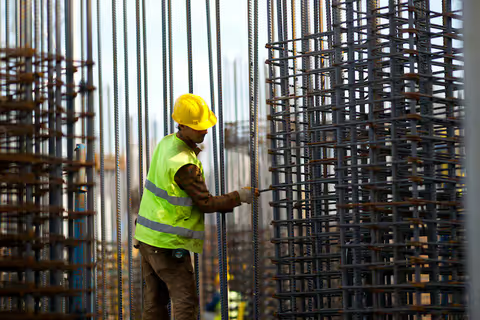
Safety compliance during structural assembly
-
Integration with other building systems
Modern construction increasingly depends on steel frameworks because they support large spans, taller buildings, and faster construction timelines compared to many traditional materials.
Because of these advantages, structural steel contracting has become an essential specialization within the global construction industry.
Why Structural Steel Contractors Matter in Today’s Infrastructure
The demand for structural steel expertise has increased significantly as urbanization, industrial expansion, and infrastructure modernization continue worldwide.
Many countries are investing heavily in transportation networks, manufacturing facilities, logistics hubs, and urban housing. These projects rely heavily on steel structures for their strength and adaptability.
Structural steel contractors contribute to several key outcomes:
-
Structural integrity of buildings and infrastructure
-
Efficient construction timelines through prefabricated components
-
Seismic resilience in earthquake-prone regions
-
Large-scale infrastructure development such as airports, stadiums, and bridges
Steel structures also support modern architectural designs that require open floor plans, large windows, and minimal internal columns.
Another important advantage is sustainability. Steel is one of the most recyclable construction materials, making it increasingly important in projects focused on environmentally responsible building practices.
Governments and urban planners therefore often prioritize steel-based construction methods when planning long-term infrastructure expansion.
Recent Industry Developments and Trends (2025–2026)
The structural steel construction sector has seen several technological and operational developments during the past year.
Digital engineering tools are transforming the way contractors plan and execute projects. One of the most significant advancements is the increasing use of Building Information Modeling (BIM). BIM allows contractors to visualize entire structures digitally before construction begins, reducing errors and improving coordination.
Between 2025 and early 2026, several trends have gained attention in the industry:
Growing Use of Automation
-
Robotic welding systems in steel fabrication plants
-
Automated cutting and shaping equipment
-
Precision laser measurement technologies for on-site installation
Expansion of Modular Construction
Prefabricated steel modules are increasingly used in hospitals, hotels, and residential developments. These modules are manufactured in controlled environments and assembled on site, improving quality control and reducing construction time.
Sustainability and Green Steel
Many steel manufacturers are investing in low-carbon production processes. Hydrogen-based steel production and electric arc furnace technologies have become important topics in sustainability discussions during 2025–2026.
Digital Project Management
Cloud-based construction management platforms are helping contractors coordinate large teams, track materials, and manage documentation efficiently.
These developments are reshaping how structural steel contractors operate in both large infrastructure projects and private commercial developments.
Regulations and Construction Standards Affecting Structural Steel Work
Structural steel work is highly regulated to ensure public safety and structural reliability. Governments and engineering authorities establish building codes that define how steel structures must be designed and installed.
Several regulatory frameworks influence structural steel construction worldwide.
Building Codes and Engineering Standards
Common standards used in structural steel projects include:
-
International Building Code (IBC) guidelines
-
American Institute of Steel Construction (AISC) standards
-
Eurocode structural design standards
-
National building codes adopted by individual countries
These standards define critical requirements such as:
-
Load capacity calculations
-
Wind and seismic resistance
-
Material quality standards
-
Welding and bolting procedures
Safety Regulations
Structural steel installation involves heavy materials and elevated work areas, which require strict safety protocols. Occupational safety authorities typically mandate:
-
Worker fall protection systems
-
Crane operation guidelines
-
Steel erection safety procedures
-
Equipment inspection standards
Environmental and Sustainability Policies
In recent years, many governments have introduced sustainability guidelines for construction projects. These policies encourage the use of recyclable materials and efficient building methods.
Large public infrastructure projects may require contractors to comply with environmental certification systems such as:
-
LEED (Leadership in Energy and Environmental Design)
-
BREEAM sustainability assessments
These regulations ensure that steel construction projects meet safety, engineering, and environmental requirements.
Tools and Digital Resources Used in Structural Steel Projects
Structural steel contractors rely on a wide range of engineering software, digital planning tools, and technical resources to complete complex projects.
These tools help with structural modeling, project coordination, and precision measurement during installation.
Below is an overview of commonly used tools in the industry.
| Tool / Platform | Primary Function | Common Use in Steel Construction |
|---|---|---|
| Autodesk Revit | Building Information Modeling (BIM) | Structural modeling and coordination |
| Tekla Structures | Detailed steel structure modeling | Fabrication drawings and connection design |
| AutoCAD | Engineering drafting | Technical plans and structural layouts |
| Procore | Construction project management | Document control and site coordination |
| Bluebeam Revu | Digital plan review | Markups and construction documentation |
| Trimble Layout Tools | Precision positioning technology | Accurate steel component placement |
These digital platforms help contractors reduce errors, coordinate with engineering teams, and improve construction efficiency.
In addition to software tools, many professionals rely on technical resources such as:
-
engineering reference manuals
-
structural calculation templates
-
construction planning frameworks
-
industry safety guidelines
These resources support the technical complexity involved in steel-based construction projects.
Frequently Asked Questions
What do structural steel contractors do?
Structural steel contractors assemble and install steel frameworks used in buildings and infrastructure. Their work includes steel erection, structural alignment, connection installation, and coordination with engineering teams.
Why is steel commonly used in construction?
Steel provides high strength relative to its weight, allowing buildings to support heavy loads while maintaining design flexibility. It is also recyclable and performs well in seismic and high-wind conditions.
What types of projects use structural steel?
Structural steel is used in many large construction projects including:
-
commercial office buildings
-
industrial manufacturing facilities
-
bridges and transportation infrastructure
-
stadiums and large public venues
-
high-rise residential towers
How does Building Information Modeling help steel contractors?
Building Information Modeling allows engineers and contractors to visualize the entire structure digitally before construction begins. This reduces design conflicts and improves coordination between project teams.
Is structural steel environmentally sustainable?
Steel is considered environmentally sustainable because it is highly recyclable. Many modern steel production processes also aim to reduce carbon emissions through advanced manufacturing technologies.
Conclusion
Structural steel contractors play a fundamental role in shaping modern infrastructure and urban development. Their expertise enables the construction of durable, large-scale structures that support transportation networks, industrial facilities, and modern architecture.
As construction technology evolves, the industry is adopting advanced digital modeling tools, automated fabrication systems, and sustainable material production methods. These developments continue to improve efficiency, safety, and environmental performance across construction projects.
Regulatory frameworks and engineering standards ensure that steel structures maintain high levels of safety and reliability. By combining technical expertise with modern construction technologies, structural steel contractors contribute to building resilient infrastructure for growing cities and industries around the world.